The Stonesteps neighborhood has a lot of talent packed into a small area that’s yielded quite a few stories in Encinitas Magazine. You’ve got first-rate artists, musicians, surfboard shapers, and much more.
For some time now, I’ve wanted to do a profile on musician, recording studio engineer, and guitar repair pro, Lee Knight, who’s been a long-time resident in the Stonesteps neighborhood for about 35 years now. We originally became close friends bonding around music, during my last year at San Dieguito High School. Because Lee was two years younger than me, I lost track of him after I graduated and moved onward to the music department at UCSD.
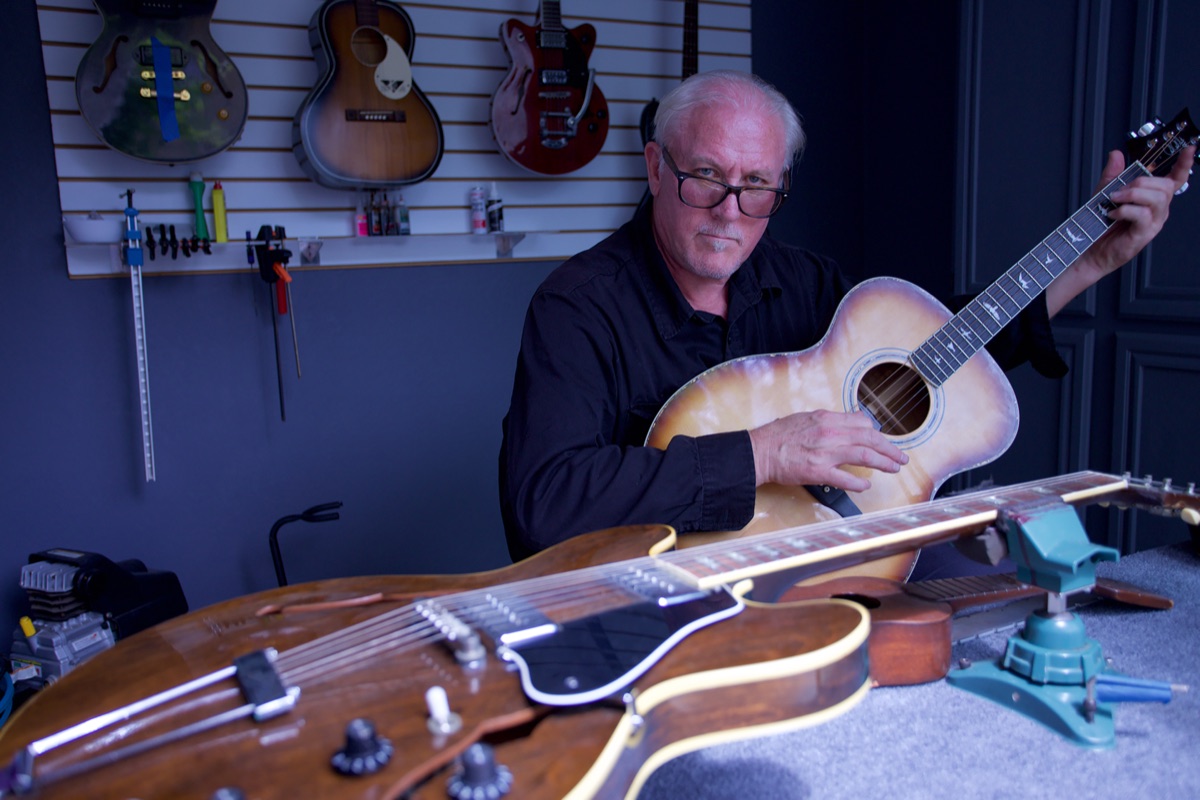
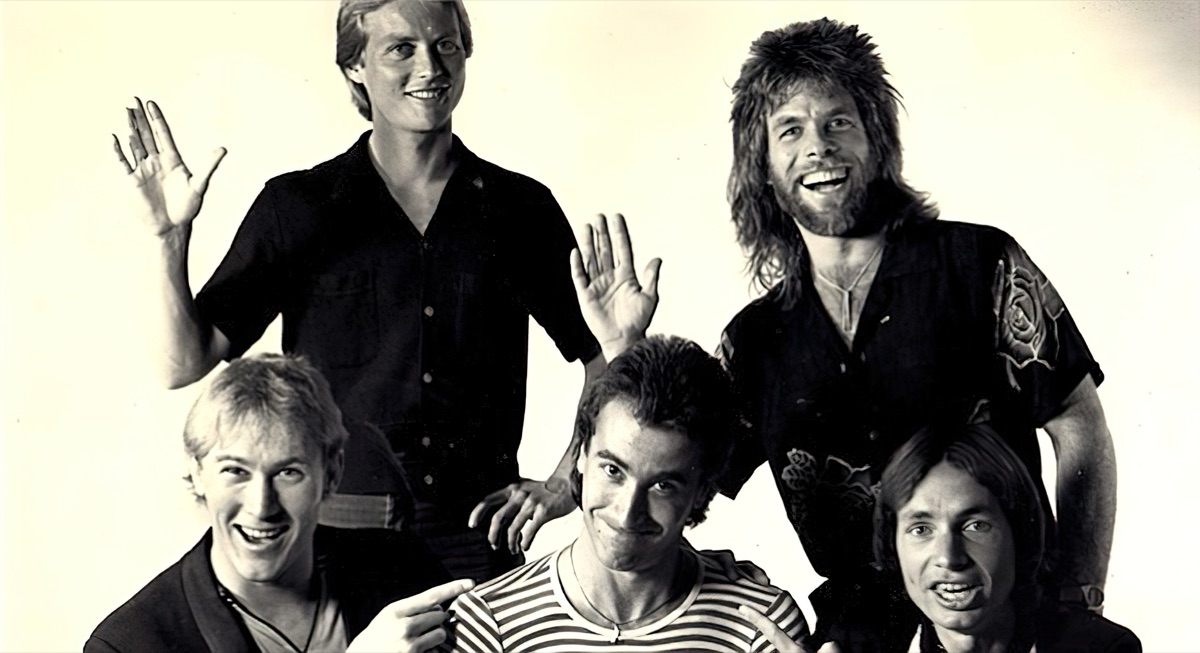
One of my favorite bands in 1978 was the band Bratz. I had just turned 21, and was going to clubs to hear the live music. The Bratz played at the local clubs in North County, and were hugely popular at clubs like Dicks at the Beach and the Distillery—both in Solana Beach. And who could forget Little Bavaria on Carmel Valley Road in Del Mar? I used to work with the first bass player in Bratz, Rick Wynn. We were both prep cooks in the kitchen at the Chart House in Cardiff, along with another local (now legendary) guitar player Mark Wood, currently of Custard Pie band fame.
A couple of years later, I went to a Bratz performance at the Belly Up Tavern in Solana Beach, and lo and behold I discovered that my old high school buddy Lee Knight was now their bass player. That impressed me. I quickly discovered that Lee had developed into a first-class rock, blues, and jazz bass player.
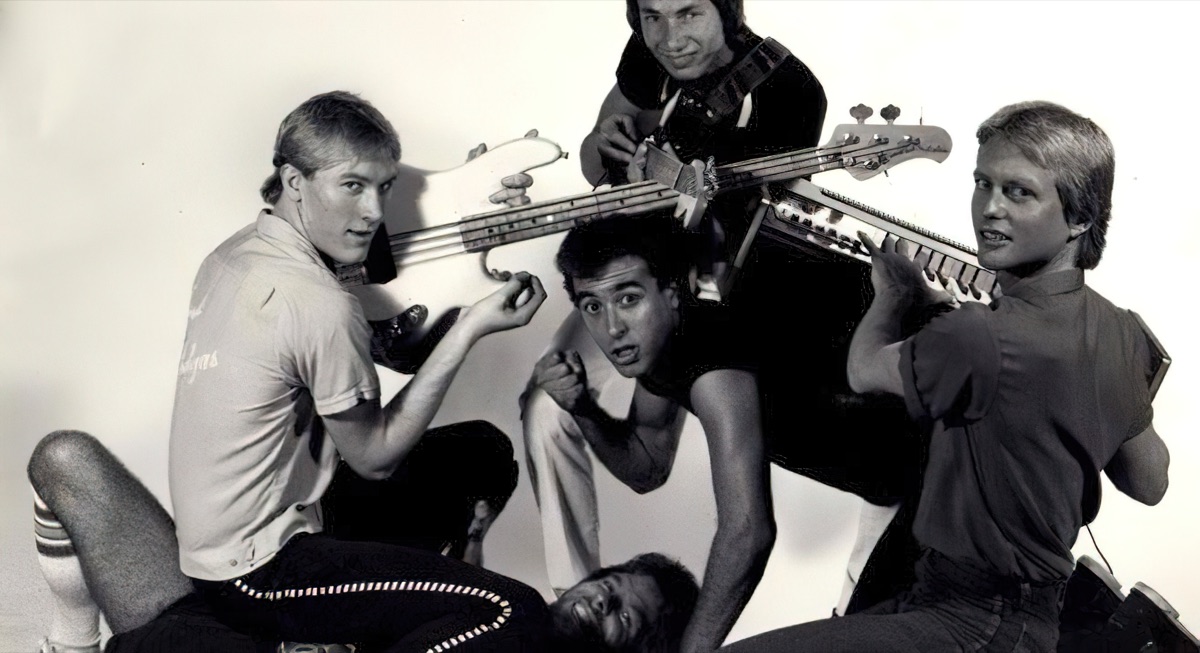
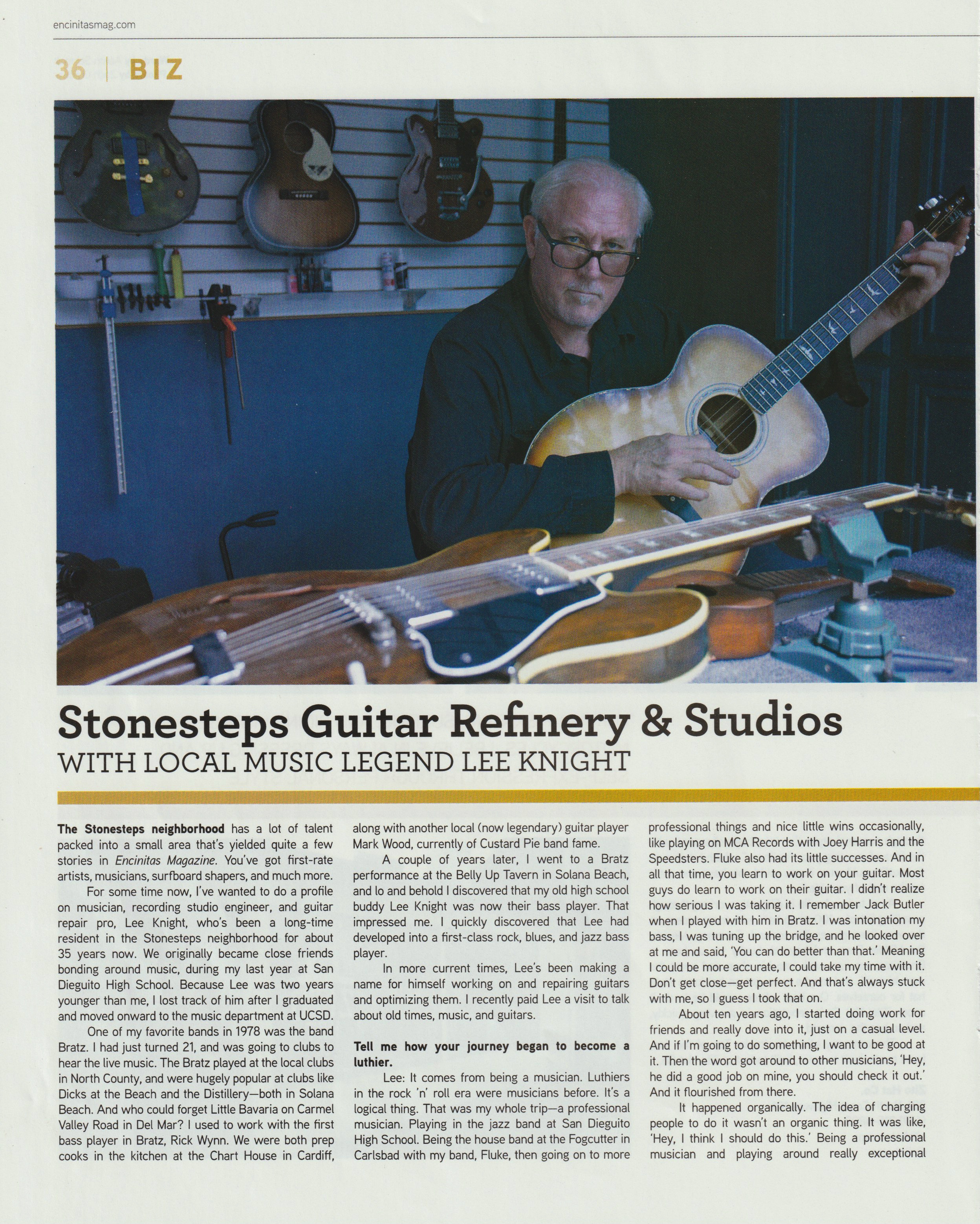
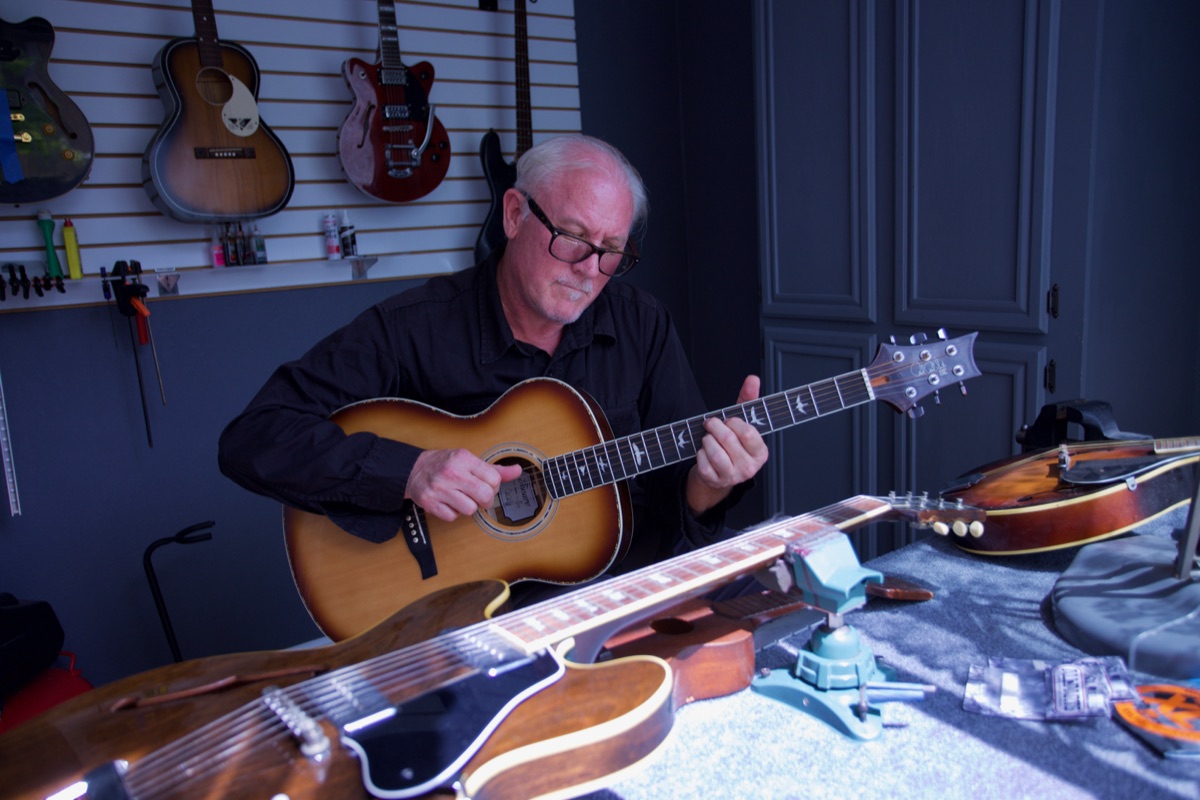
In more current times, Lee’s been making a name for himself working on and repairing guitars and optimizing them. I recently paid Lee a visit to talk about old times, music, and guitars.
Tell me how your journey began to become a luthier.
Lee: It comes from being a musician. Luthiers in the rock ’n’ roll era were musicians before. It’s a logical thing. That was my whole trip—a professional musician. Playing in the jazz band at San Dieguito High School. Being the house band at the Fogcutter in Carlsbad with my band, Fluke, then going on to more professional things and nice little wins occasionally, like playing on MCA Records with Joey Harris and the Speedsters. Fluke also had its little successes. And in all that time, you learn to work on your guitar. Most guys do learn to work on their guitar. I didn’t realize how serious I was taking it. I remember Jack Butler when I played with him in Bratz. I was intonation my bass, I was tuning up the bridge, and he looked over at me and said, ‘You can do better than that.’ Meaning I could be more accurate, I could take my time with it. Don’t get close—get perfect. And that’s always stuck with me, so I guess I took that on.
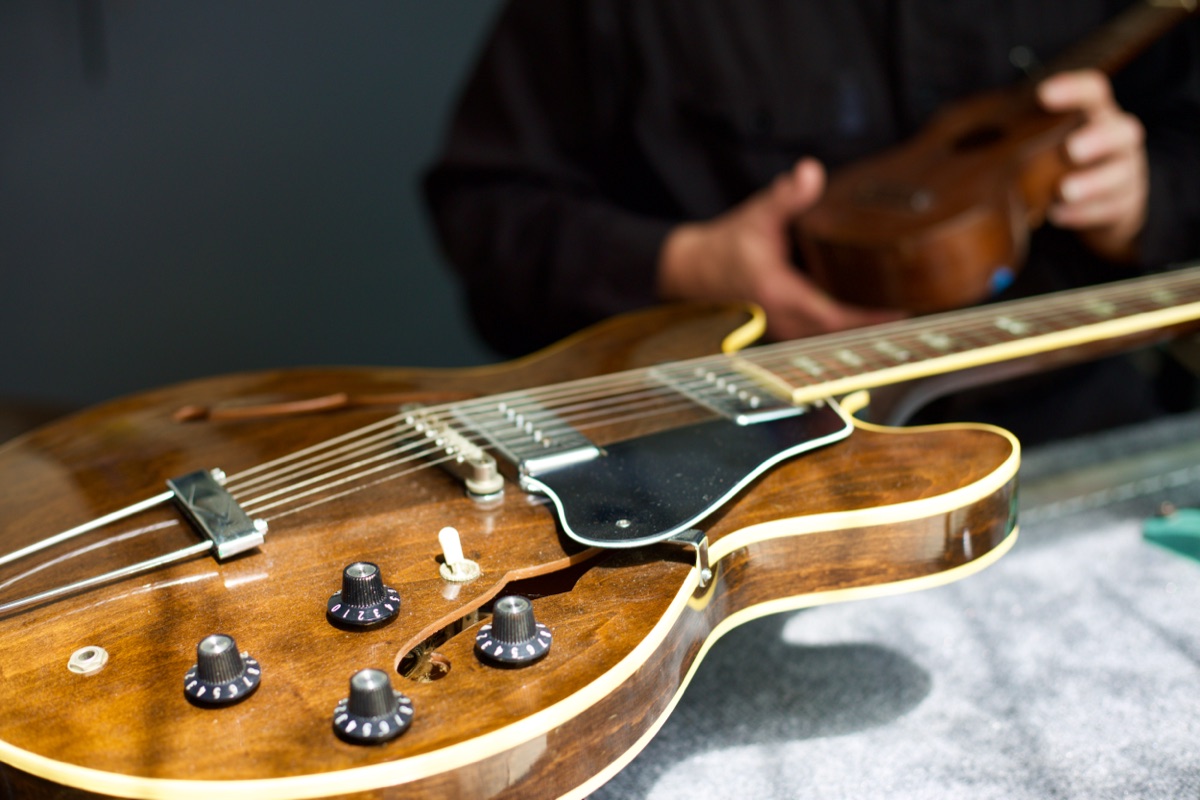
About ten years ago, I started doing work for friends and really dove into it, just on a casual level. And if I’m going to do something, I want to be good at it. Then the word got around to other musicians, ‘Hey, he did a good job on mine, you should check it out.’ And it flourished from there.
It happened organically. The idea of charging people to do it wasn’t an organic thing. It was like, ‘Hey, I think I should do this.’ Being a professional musician and playing around really exceptional musicians for a large part of my life, you just learn that your guitar’s a tool that needs to be maintained, done right, and not taken lightly.
That’s how I ended up doing it, and it snowballed from there.
When you buy a new guitar off the rack, is it already in optimal playing condition?
It’s never set up when it comes from the manufacturer. A good example is a guitar builder named Jean Larrivée. He makes fantastic acoustical instruments that sell upwards of $6,000 to $10,000. One of my customers knew the guy and bought one of his guitars. He wanted it to play with a different feel, and went to Mr. Larrivée and was told, ‘No, I don’t do the setup. You have to do that.’ The guy said, ‘Wait a second, I just bought a new guitar from you!’ And Mr. Larrivée said ‘No, that’s a personal thing, and you have to do it.’
Now, I’ve never heard anybody come out and say that before, but in practice, that’s what I’ve seen. A new Fender Strat off the rack at Guitar Center doesn’t play very well. But it’s perfectly capable of playing fantastic. There is a setup required whether people do it or not, or they don’t believe it. I’ve taken brand new guitars, and afterward the difference is night and day.
What about older guitars over time?
Same thing happens, but in a different way. So let’s say you bought that guitar fifteen years ago, and you set it up fifteen years ago, and five or ten years later, or whenever somebody decides to bring it back up to snuff, what happens is it has become inaccurate from fret to fret. The height of the frets, and the way they’re shaped. They wear down. They’re soft metal. If you’re playing one part of the neck a lot, there’s going to be a lot of wear. Now it’s out of sync with the other frets. Some are at their original height, and some are way lower, which means it plays out of tune and it doesn’t feel very good.
So what you do is level the frets very accurately. That’s my thing. When I did work for Jeff Moore and he was on a roll, I did ten guitars for him in a row—that’s what he was stoked about, that somebody was getting the frets perfectly level and then playable. Once you get them level, then you have to shape them by hand. And then setting up the nut and setting up the bridge, that all works in conjunction—literally from one end of the string to the other end of the string, ’til the whole thing plays like a dream.
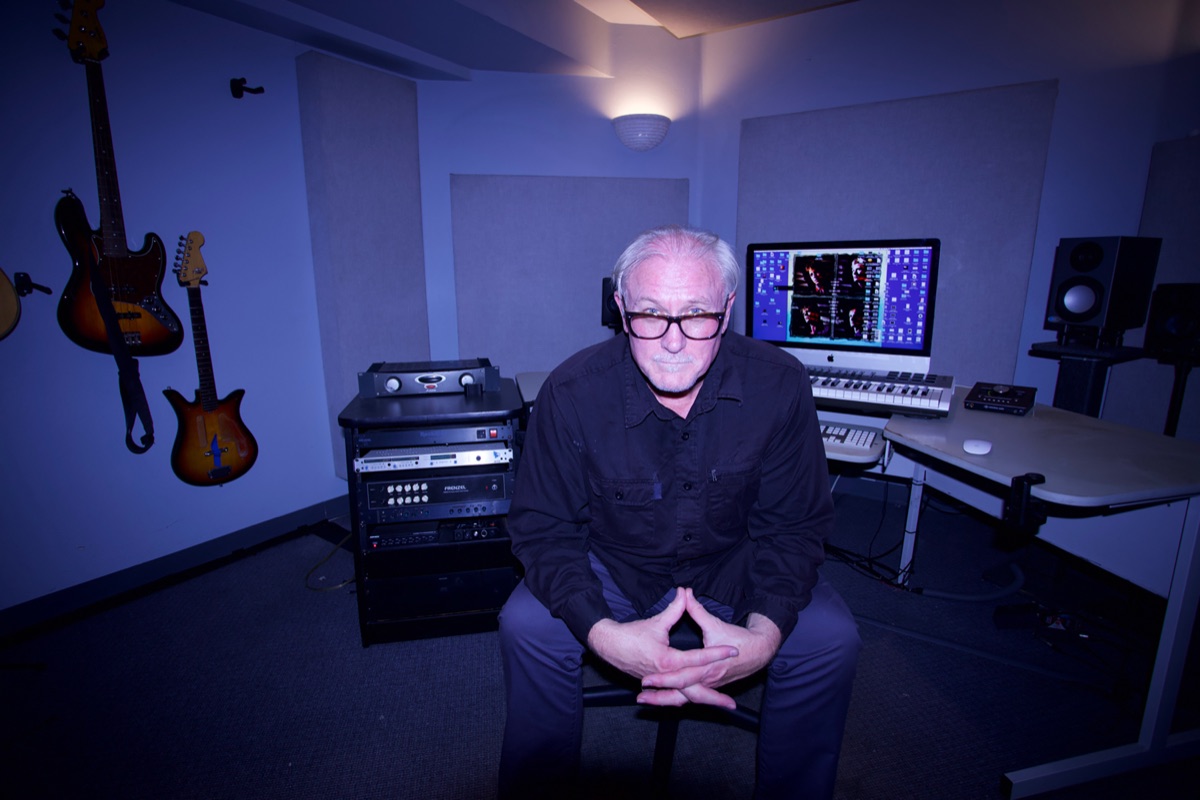
And finally, what’s the most memorable guitar you’ve worked on?
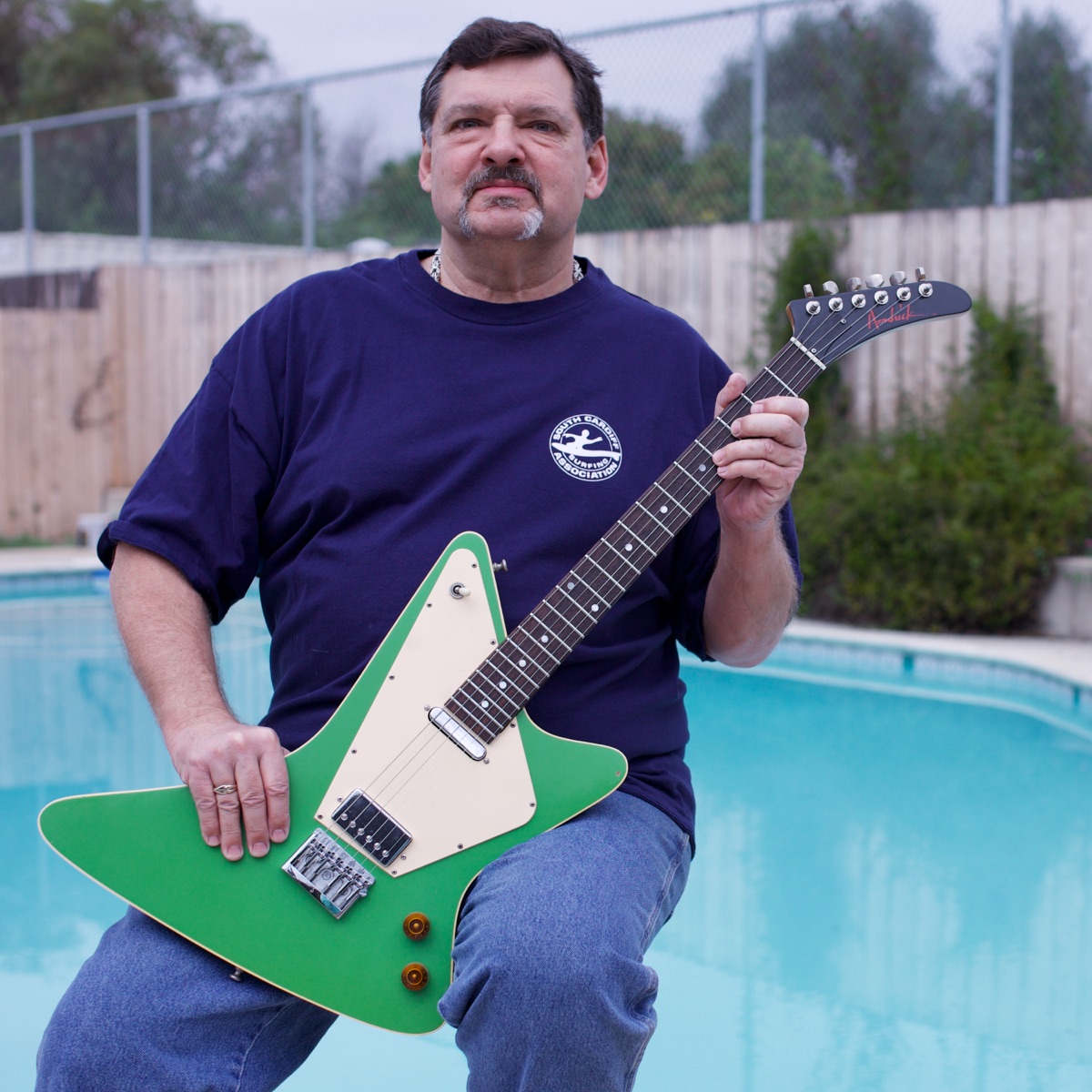
That would be your guitar, Kyle—the Hendrick Generator you brought to me that had been designed and built for ZZ Top’s Billy Gibbons.
For more info on Stonesteps Guitar Refinery & Studios, please contact Lee Knight at knightlee1@icloud.com
More From the Shoot
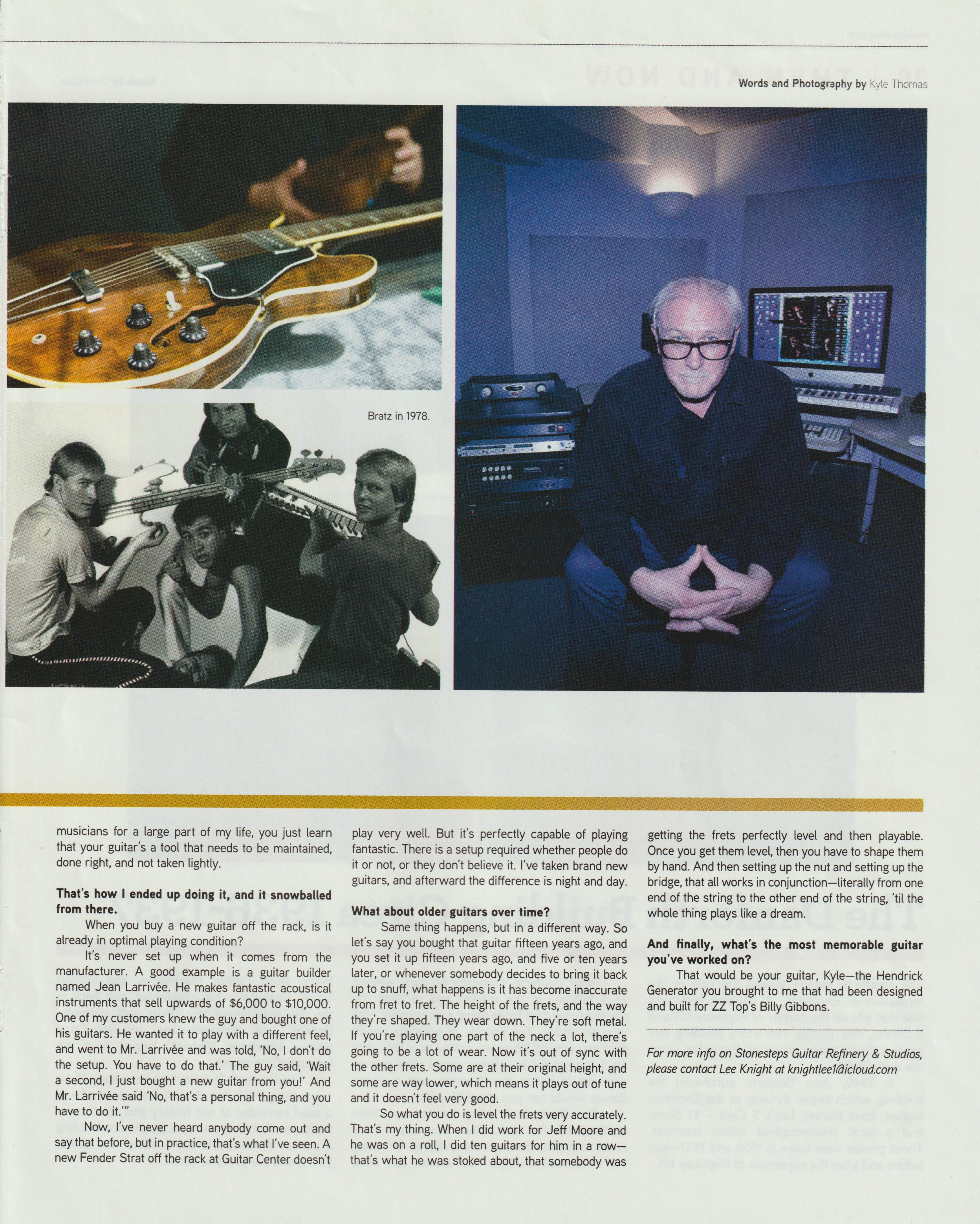
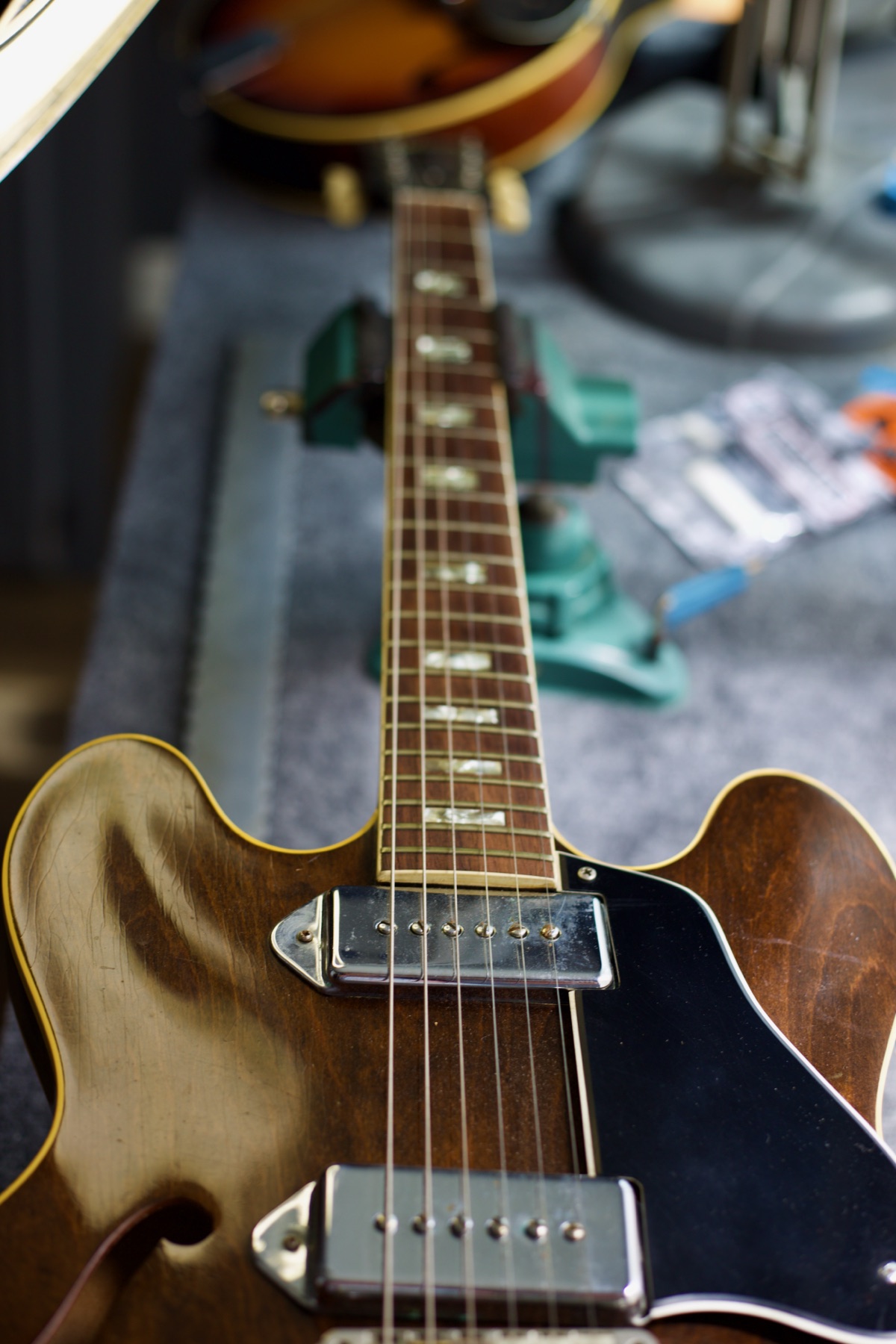
Two more frames from the July 2021 session in Lee’s shop, and a second Bratz publicity photo. None of them ran in the magazine.
As It Ran in Print
The original spread, Encinitas Magazine, February | March 2022, pages 36 and 37. Click either page to see it full size.